


What Is an Influencer Contract? What to Include and When
25 June 2026

Written By Katja Orel
Lead Editor, UGC Marketing

Fact Checked By Sebastian Novin
Co-Founder & COO, Influee
Most influencer campaigns don't go wrong because of bad content. They go wrong because nobody wrote down what was agreed.
Who owns the content after it's posted? How many revision rounds does the brand get? Can you run the post as a paid ad? These are contract questions, and they only turn into arguments when the answers were never put in writing.
An influencer contract settles them before the campaign starts. This guide covers what an influencer contract is, the clauses that actually matter, and when a formal one is worth the paperwork versus when a clear brief and a platform workflow already have you covered.

What is an influencer contract?
An influencer contract is a written agreement between a brand and an influencer that sets the terms of a paid or gifted collaboration. It covers the deliverables, the payment, the usage rights, the timeline, the revision policy, exclusivity, and disclosure.
Why it matters: without one, every ambiguity becomes a potential dispute. The four that come up most are usage rights, revision counts, payment timing, and content approval. None of them are complicated on their own. They turn into problems because two sides remembered a verbal agreement differently.
Here's how that plays out. A brand pays for three TikToks plus the right to boost them as Spark Ads. Three months later it wants to run the best one as a Meta ad too. If the contract named only TikTok, that one channel gap becomes a renegotiation, sometimes a flat refusal. The clause would have been a single line. The dispute is a week of email.
The contract usually gets agreed once the campaign itself is scoped. If the goals, tiers, and budget behind your influencer marketing campaigns aren't settled yet, lock those first, because the contract just formalizes decisions the campaign plan already made.

Key clauses every influencer contract should include
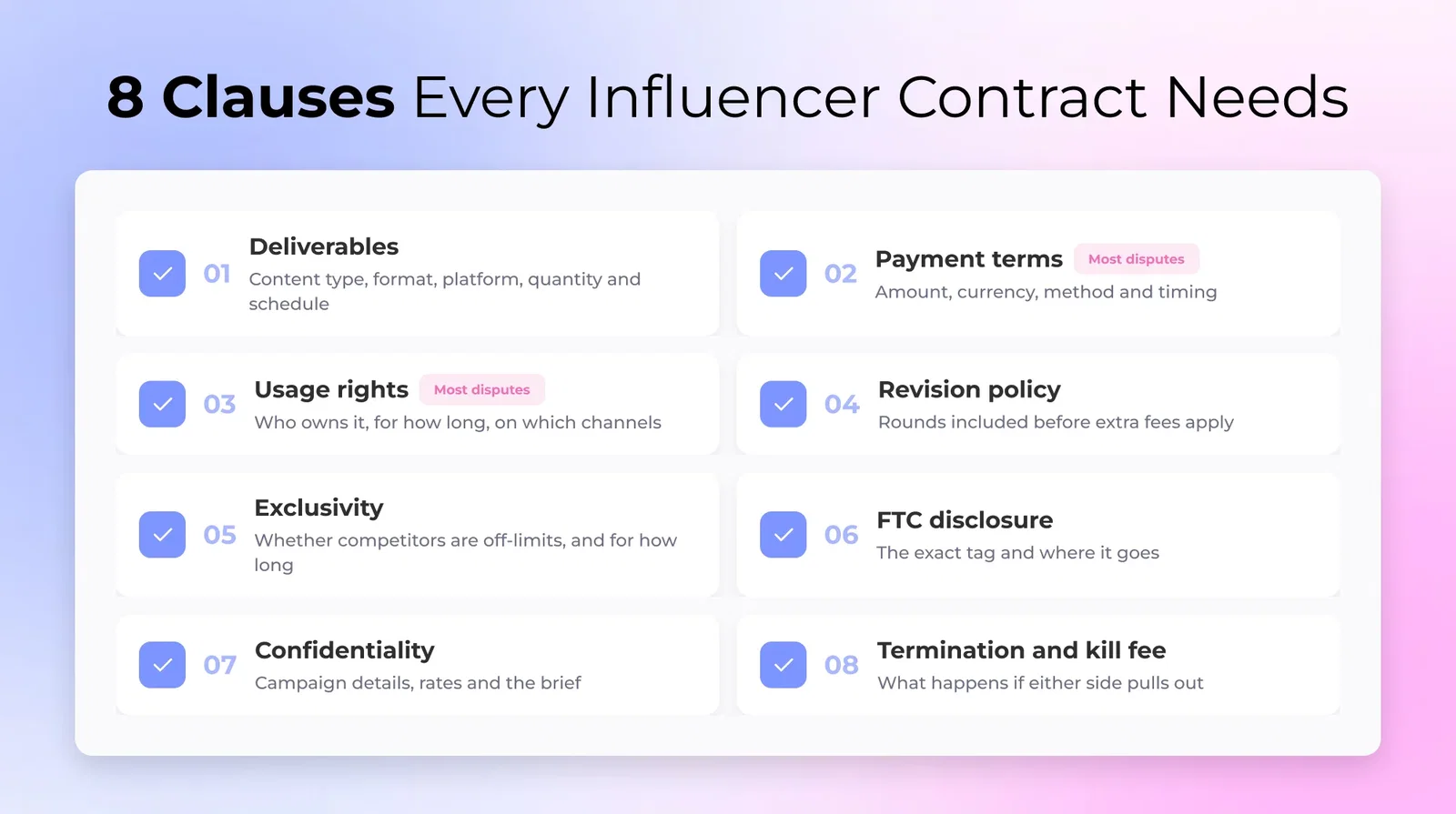
Eight clauses cover almost every campaign type, from a single gifted post to a multi-influencer paid launch. Each one exists because of a specific way deals fall apart without it.
1. Deliverables. Spell out the exact content type, format, platform, quantity, and posting schedule. Without it, the brand expects three posts, the influencer delivers one and considers the job done.
2. Payment terms. State the amount, currency, payment method, and timing. A typical line reads: full fee within 15 days of approved delivery, by bank transfer. Without it, the influencer expects to be paid on delivery, the brand pays on net-30, and a dispute follows.
3. Usage rights. Define who owns the content after posting, for how long, and on which channels. Standard organic repost rights run around six months on the brand's own channels, and paid-ad usage is a separate grant, covered by influencer whitelisting. Without it, the brand runs the post as a paid ad and the influencer asks for more money after the fact.

4. Revision policy. Set how many rounds of revisions are included before extra fees apply. Two rounds is the common include. Without it, the brand requests ten rounds of edits and the influencer starts charging after two.
5. Exclusivity. Decide whether the influencer is restricted from working with competitors, and for how long. Common terms run 30 to 90 days inside your product category, not a blanket ban on all paid work. Without it, the influencer posts for a direct competitor the week after your campaign goes live.
6. FTC disclosure. Require the influencer to clearly mark the content as sponsored. This one isn't negotiable, because US law mandates disclosure whenever there's a material connection between brand and influencer. Spell out the exact tag and placement using the FTC disclosure rules. Without it, the brand carries the regulatory risk for a disclosure the influencer skipped.
7. Confidentiality. Name what's confidential: campaign details, rates, and the brief itself. Without it, the influencer shares your negotiated rate publicly and resets the market for your next deal.
8. Termination and kill fee. Define what happens if the brand cancels after content is produced, or if the influencer fails to deliver. Without it, the brand cancels and the influencer has no recourse, or the influencer ghosts and the brand has no leverage.
Do you always need a formal influencer contract?
No. A formal influencer contract is worth the friction on some campaigns and pure overhead on others. The deciding factor is campaign scale, not principle.

Micro & nano influencers starting at A$60

5,000+ Vetted Influencers in Australia
Gifted campaigns with nano influencers. Even a gifted nano deal is safer with something in writing. You rarely need a full legal contract here, but get the deliverables, disclosure, and usage rights agreed over the platform or email before any product ships. Disclosure still applies, since free product has to be marked as #ad, and so do usage rights if you plan to run the post as a paid ad. The same lightweight setup runs through most influencer gifting programs, where a short set of agreed terms does the job. A single nano influencer deal rarely needs a lawyer, but it shouldn't run on a verbal handshake either.
Paid campaigns at any tier. Always use a contract. Payment disputes are the most common problem in influencer marketing and the easiest to prevent with two lines about amount and timing.
Usage rights for paid ads. Non-negotiable at any budget. Running an influencer's content as a paid ad without explicit written permission is a legal risk whether the deal was $200 or $20,000.
Exclusivity or long-term partnerships. Always contract. The more complex the relationship, the more a written contract matters.
Where the scale rule breaks down: mid-tier paid deals that feel small but carry real usage. A €600 paid post you plan to run as ads for a year is not a handshake deal, even though the fee looks minor. Judge the contract by what you're doing with the content, not just what you paid for it.
The math is simple. A blown usage-rights dispute can wipe out the return on a campaign that otherwise worked, so the cost of skipping the contract shows up directly in your influencer marketing ROI.

Influee removes the need for a separate contract on most campaigns. Deliverables, revision rounds, usage rights, and payment are agreed and enforced inside the influencer marketing platform before any content is produced.
In practice that means the deliverables, the revision cap, and the usage window are set as campaign rules when you brief the influencer, and both sides agree to them before anyone shoots. The agreement isn't a separate PDF anyone can forget. It's built into the workflow the collaboration runs on.

The difference between an influencer contract and an influencer brief
A contract and a brief are two documents with two jobs, and confusing them is one of the most common campaign management mistakes.
The brief covers creative direction: what the content should say, show, and feel like. It's the instruction manual for the post, and a strong influencer brief is what gets you on-brand content back.
The contract covers legal obligations: who owns what, who pays what, and what happens if things go wrong. It's the safety net under the creative work.
In practice the brief might say "film a 30-second unboxing, warm and casual, mention the €34 price," while the contract says "brand owns six months of organic and paid usage, two revision rounds included, payment within 15 days." Same campaign, different document.
Both belong in a well-run campaign, and they come in order. The brief comes first and defines what's being agreed, usually right after influencer outreach wraps and the partnership is confirmed. The contract formalizes that agreement so the terms outlast a friendly email thread.

What happens if an influencer breaks a contract?
A broken contract gives the brand specific, practical options, and most never involve a lawyer. What you can do depends on which clause was broken.
- Withhold payment until the agreed content is delivered to spec.
- Request a revision to meet the brief, within the revision count the contract already set.
- Invoke the kill fee clause if the content is unusable and the deal is ending.
- Pursue legal remedies for a material breach. This is rarely needed at the nano or micro tier and mostly matters on larger campaigns with real money on the line.
A common case: the influencer delivers, but the video misses two of the three key messages. The revision clause means you ask for one fix inside the included rounds, not a refund fight. Without that clause, the same situation turns into a standoff over whether the content counts as delivered.
Most influencer contract disputes get resolved through a conversation, not a courtroom. The contract's real value is that it gives both sides a written reference to point at, which usually ends the disagreement before it escalates.
One note before you draft anything: this post is general guidance, not legal advice. For high-value or complex campaigns, have a lawyer review the contract before anyone signs.
Micro & nano influencers starting at A$60
5,000+ Vetted Influencers in Australia
FAQ
What is an influencer contract?

An influencer contract is the written agreement that locks down what a brand and an influencer settled before the work starts: the deliverables, the fee and payment timing, and the rights to the content. It turns a verbal understanding into terms either side can point to later.
What should be included in an influencer contract?
An influencer contract should cover eight clauses: deliverables, payment terms, usage rights, revision policy, exclusivity, FTC disclosure, confidentiality, and termination with a kill fee. Anything past those eight is usually padding.
Do you need a contract with influencers?
You need a contract with influencers whenever money or content rights are on the table: any paid deal, any paid-ad usage, and any exclusivity or long-term partnership. Gifted nano campaigns are the main exception, though even those should have the terms agreed in writing.
What is the difference between an influencer brief and an influencer contract?
An influencer brief and an influencer contract do different jobs. The brief is the creative side, what to make and how it should land; the contract is the legal side, who owns the content, what gets paid, and what happens if things go wrong.
What happens if an influencer breaks a contract?
A broken influencer contract gives the brand several options, scaled to the breach: withhold payment until delivery, request revisions inside the agreed rounds, invoke the kill fee, or pursue legal action for a serious failure. Most cases get sorted by a quick conversation, with the contract as the reference point.
Table of Contents

What is an influencer contract?
Key clauses every influencer contract should include
Do you always need a formal influencer contract?
The difference between an influencer contract and an influencer brief
What happens if an influencer breaks a contract?
FAQ

Work with influencers from Australia
Australia

Holly

Bungendore

Emily
South Brisbane

Sue
Canning Vale

Tiana
Youngtown